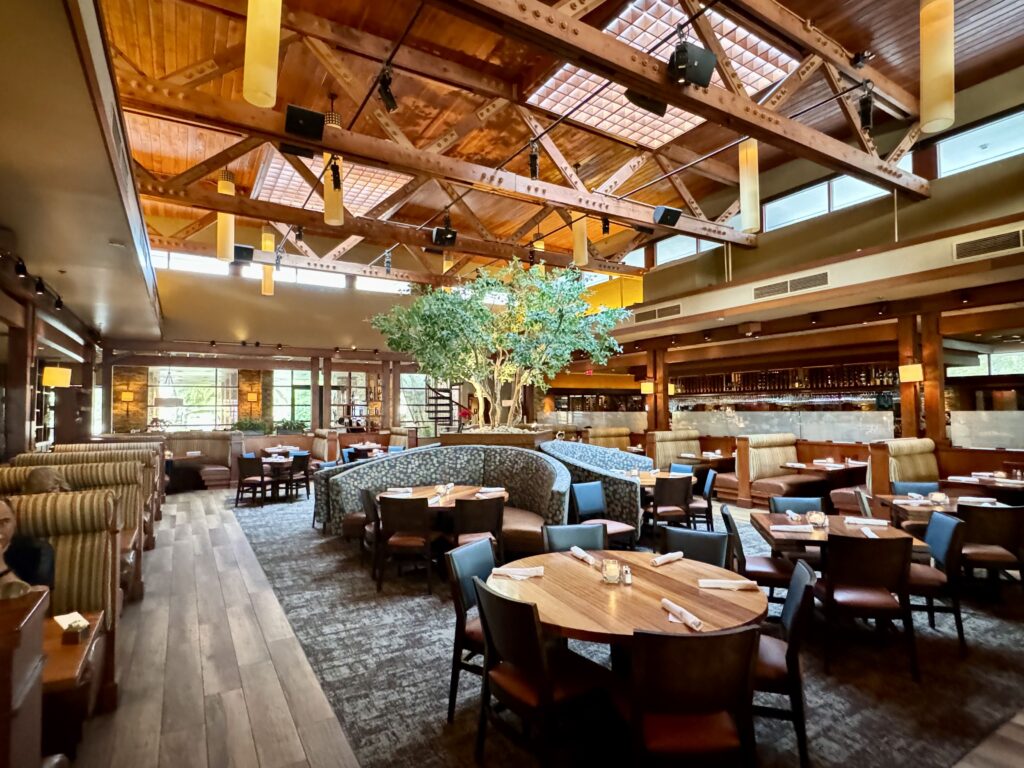
Located on the bustling Sand Lake Road, otherwise known as Orlando’s “Restaurant Row,” Seasons 52 presents a fascinating paradox for the professional food manager. Their entire brand identity is built on a rigid logistical constraint: no dish on the menu exceeds a specific caloric threshold (historically 470–590 calories). While I admire the discipline required to maintain such a standard across a high-volume chain, as a critic, I am always looking for the “invisible cost” of such restrictions. When you remove the heavy fats—the butter, the oils, the deep-fryers—you place an immense burden on the quality of the raw ingredients and the precision of the seasoning to carry the flavor profile.
The atmosphere is “casually sophisticated,” with dark woods and a piano bar that attempts to bridge the gap between a business dinner and a date night. But we aren’t here for the music; we are here to see if the kitchen can deliver a high-end experience while operating under a nutritional handicap.
The Ahi Tuna Tartare is a staple of their starter menu and serves as a primary indicator of their sourcing standards. It arrives as a vibrant, colorful stack of handline-caught tuna, avocado, and a tropical mango salsa, accented with dots of sriracha and wasabi. From a production standpoint, it is a clever dish—it relies on the natural fats of the tuna and avocado to provide a creamy mouthfeel without the need for heavy dressings. The tuna is fresh, with a clean, metallic finish, but the “tropical salsa” occasionally leans toward the overly sweet, threatening to mask the delicate flavor of the fish. It is a competent, refreshing dish, but it lacks the bold, umami depth found in versions that aren’t afraid of a bit of soy-based sodium.
Then we move to the Entrée: the Brick-Oven Roasted Chilean Sea Bass. Chilean Sea Bass is, by its very nature, a high-fat, buttery fish—which makes it a daring choice for a low-calorie concept. Seasons 52 handles this by roasting it in a brick oven with a ginger-sesame glaze. The cook on the fish is technically sound; it flakes into large, succulent pearls as it should. However, the ginger-sesame glaze, while aromatic, feels a bit “safe.” In the absence of a rich, butter-based sauce, I expected a more aggressive sear or a more complex spice profile. The accompaniment of snow peas and a roasted mushroom wild rice pilaf is utilitarian. The rice pilaf, in particular, often suffers from the “dryness” common in low-fat cooking; it provides bulk but lacks the soul-satisfying texture of a properly parboiled grain.
What you get at Seasons 52 is honesty. You are eating food that hasn’t been “fixed” with a ladle of butter. But the trade-off is a certain lack of decadence that many diners expect at this price point. It is a triumph of engineering, but occasionally a defeat of the spirit.
- Nutritional Engineering: Commendable ability to deliver high-protein meals under strict caloric limits without resorting to artificial substitutes.
- Tuna Freshness: Sushi-grade quality that holds up to scrutiny; well-paired with avocado to compensate for the lack of oil-based dressings.
- Sea Bass Preparation: Brick-oven roasting maintains the moisture of the fish, though the glaze lacks the “wow” factor of a more concentrated reduction.
- Flavor Profile: Consistently “bright” and “fresh,” but rarely hits the deep, savory notes found in traditional fine dining.
Seasons 52 is the perfect destination for the diner who wants to eat out without the subsequent “culinary hangover.” It is reliable, disciplined, and technically proficient. However, for the Tsar, who occasionally seeks the transformative power of a perfectly emulsified sauce, it remains a bit too restrained.
3 Tsar Stars 🌟🌟🌟
Leave a Reply