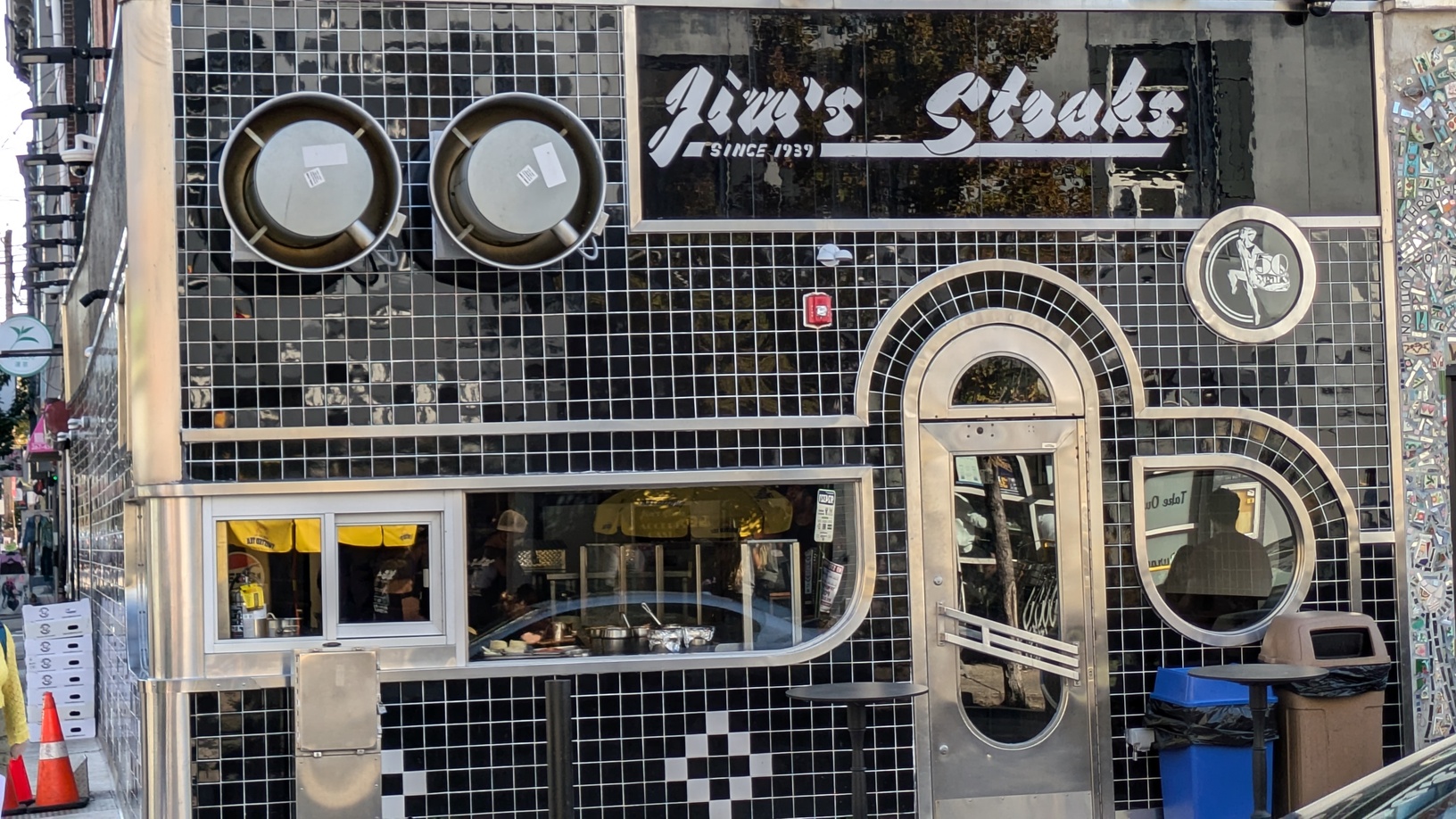
There was a time when the mere mention of Jim’s West Philly Steaks (specifically the South Street institution) evoked a sense of sensory reverence. The black-and-white tiles, the smell of grease wafting toward the Delaware River, and the sight of the meat being worked over the heat like a rhythmic dance. As a Cornell-certified professional, I appreciate legacy, but I value the integrity of the product even more. Unfortunately, as any seasoned analyst knows, time and “efficiency” can be the cruelest ingredients in a kitchen’s arsenal.
My return to South Street was fueled by nostalgia, but the reality on the plate was a stark reminder that you cannot eat memories. Historically, Jim’s was a titan, a place where the balance of fat, salt, and heat was almost poetic. But recent shifts in their production methodology have introduced a variable that I simply cannot overlook: the transition to a minced, almost granulated steak.
A cheesesteak is a study in texture. When you move away from a traditional chop or a thin slice toward a minced consistency, you sacrifice the soul of the ribeye. The meat at Jim’s now lacks the “pull” and the chew that once defined it. It has become a homogenous mass, a meat-slurry that, while efficient for high-speed service, feels industrial rather than artisanal. From a food production management perspective, I understand the move—minced meat cooks faster and is easier to portion—but from a culinary perspective, it is a regression.
Whether you opt for the classic, neon embrace of the Whiz or the slightly more sophisticated saltiness of the provolone, the result is the same: the cheese no longer has anything to “cling” to. Instead of coating ribbons of beef, it simply saturates a pile of fine crumbs, creating a texture that is closer to a “Sloppy Joe” than a traditional Philadelphia steak. The flavor of the beef, while still present, is lost in the shuffle; it lacks the seared, Maillard-reaction edges that only a coarser chop can provide.
The roll remains a sturdy vehicle, and the onions are still sautéed with that familiar South Street grit, but they are carrying a passenger that has lost its way. The brilliance of the “old” Jim’s was in its defiance—it felt raw and real. This new iteration feels like a product designed by a spreadsheet, optimized for volume at the expense of the very character that made it a destination.
- Minced Meat Texture: A significant departure from historical standards; the fine grain results in a loss of “mouthfeel” and beefy integrity.
- Cheese Integration: Without larger pieces of steak to bind to, the Whiz or Provolone becomes a heavy, muddy sauce rather than a complementary layer.
- Production Efficiency vs. Quality: While the service speed remains impressive, the technical trade-off in meat preparation is a net negative for the discerning palate.
- Nostalgia Factor: The atmosphere still carries the weight of Philadelphia history, but the plate no longer supports the legend.
It is a difficult thing to watch a favorite falter. For the casual tourist, Jim’s will likely still satisfy the craving for a “Philly experience,” but for those of us who measure success in nuances of grain and sear, the change is palpable. It remains a functional, decent sandwich, but it has vacated the throne it once occupied.
3 Tsar Stars 🌟🌟🌟
Leave a Reply